Physical Address
304 North Cardinal St.
Dorchester Center, MA 02124
Physical Address
304 North Cardinal St.
Dorchester Center, MA 02124

war • strategy • geopolitics
war • strategy • geopolitics
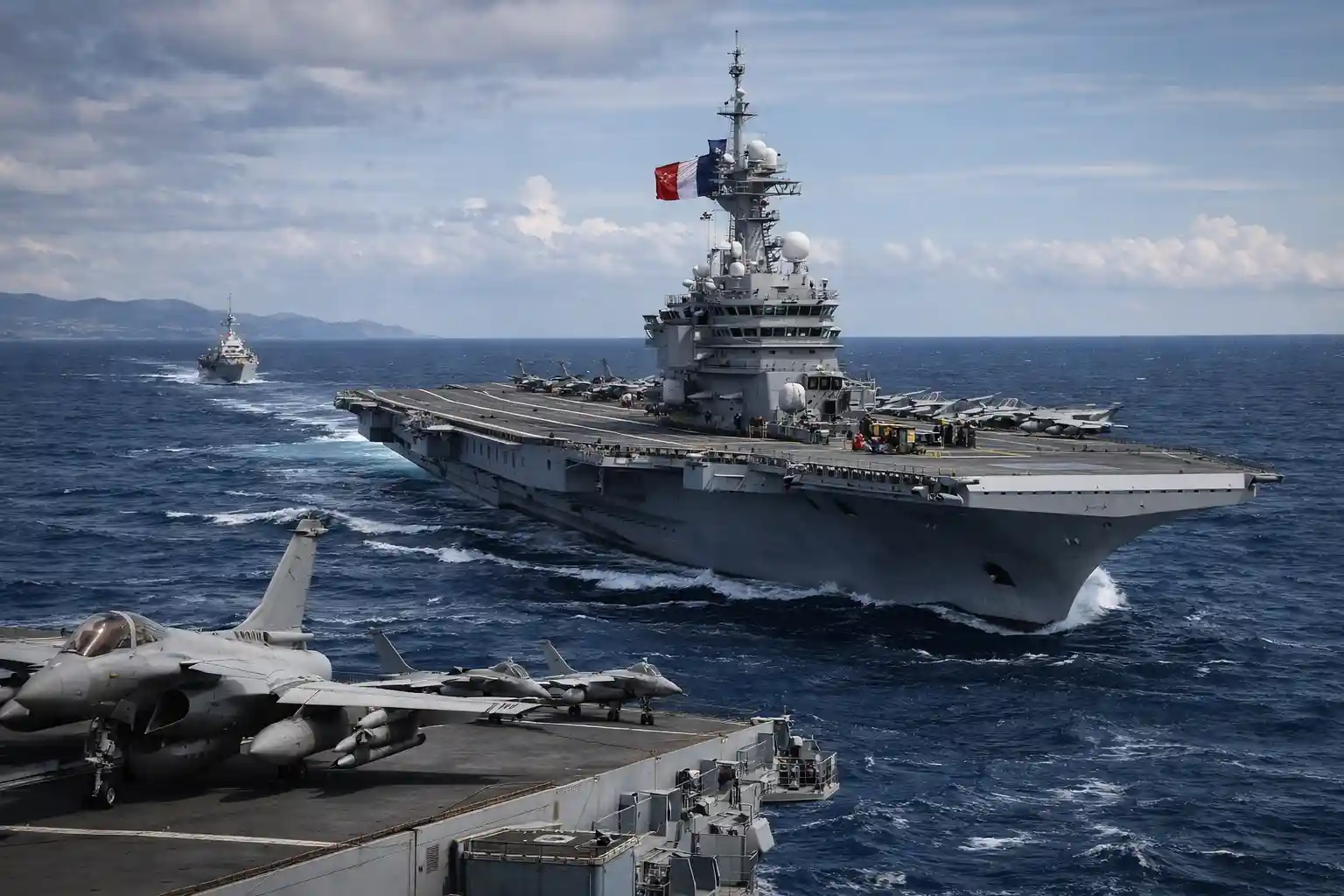
European leaders are currently strengthening their military footprint in the Eastern Mediterranean. This strategic move signals a decisive new phase in European defense autonomy. Specifically, France and Greece have deployed significant naval and air assets to Cyprus. This escalation follows a mysterious drone strike near a British military installation. Consequently, the European Union is now demonstrating its willingness to defend its sovereign borders independently.
The deployment began shortly after a drone exploded near the Akrotiri airbase. This facility serves as a critical node for regional security. In response, French President Emmanuel Macron traveled to Nicosia for emergency talks. He was joined by Greek Prime Minister Kyriakos Mitsotakis. Together, they reaffirmed their commitment to the security of the island. Macron declared that any threat to Cyprus is a direct threat to Europe.
This unified front reflects a growing desire for European defense autonomy across the continent. For years, EU nations relied heavily on external security guarantees. However, the current geopolitical climate has forced a change in perspective. Leaders now argue that Europe must possess the tools to manage its own neighborhood. This shift is particularly evident as regional conflicts continue to expand. For instance, recent Iran retaliatory attacks and war expansion have heightened anxiety across the Mediterranean.
France has assumed the most prominent role in this military surge. The aircraft carrier Charles de Gaulle is now positioned off the Cypriot coast. In addition, a multi-mission frigate provides specialized anti-air support. This presence ensures that France can respond to any aerial threat in real-time. Moreover, the deployment serves as a visible deterrent to regional adversaries.
Greece moved with equal speed to support its ally. Within 24 hours, Athens dispatched two modern frigates to the area. Furthermore, four fighter jets are now conducting regular patrols over the island. Military officials described the drone used in the initial strike as a Shahed-type system. This technology is frequently linked to broader Middle Eastern tensions. Interestingly, as US strikes weaken Iran military capabilities, European nations are also bracing for potential blowback.
The technical coordination between French and Greek forces has been seamless. They are currently utilizing shared satellite intelligence to monitor maritime traffic. This cooperation is a practical application of European defense autonomy in action. By working together, these nations reduce their dependence on non-European intelligence streams. Consequently, the Eastern Mediterranean is becoming a laboratory for future EU defense integration.
The joint appearance of Macron and Mitsotakis carried immense symbolic weight. Both leaders emphasized that Europe cannot remain a “security consumer.” Instead, they believe Europe must become a “security provider.” Mitsotakis noted that the current crisis proves the necessity of collective action. “If we do not act together now, we fail our future,” he stated during a press conference.
Indeed, the push for European defense autonomy has gained significant momentum in 2026. This trend is driven by a series of global security shocks. These include the ongoing war in Ukraine and volatile shifts in US foreign policy. Many European capitals now prioritize strategic independence over traditional reliance on NATO alone. Consequently, they are investing more in indigenous military capabilities.
Furthermore, the deployment in Cyprus is not just about local defense. It is a message to the global community. Europe is signaling that it will protect its energy interests and trade routes. These waterways are essential for the continent’s economic survival. Therefore, maintaining a credible military presence is viewed as a prerequisite for diplomatic leverage. This aligns with the broader US-Iran military conflict Washington strategy 2026, which also emphasizes regional dominance.
The rise of European defense autonomy is supported by a robust arms industry. A recent report indicates that European weapons exports have surged by 36 percent. This growth rate currently exceeds all other global regions. Today, Europe accounts for nearly 28 percent of the world’s total arms trade. France leads this charge with high demand for its Rafale fighter jets.
Nations across the Mediterranean are increasingly buying European-made hardware. Cyprus recently purchased advanced French helicopters to modernize its fleet. Greece is also integrating French-built frigates into its naval command. These acquisitions strengthen the interoperability of European forces. When countries use the same equipment, they can coordinate much more effectively during a crisis.
Moreover, this industrial growth provides the economic backbone for European defense autonomy. It ensures that European money stays within the European economy. This cycle of investment creates jobs and fosters technological innovation. High-tech defense projects also contribute to advancements in civilian sectors. Consequently, the defense industry is now a key pillar of European sovereign power. Similar shifts in technology are seen in the drone defense Ukraine anti-drone warfare strategy.
The Eastern Mediterranean is a vital corridor for global energy transport. Significant natural gas deposits have been discovered in the waters surrounding Cyprus. Protecting these assets is a primary objective of the current deployment. European leaders recognize that energy security is synonymous with national security. Any disruption to these resources could trigger economic instability across the EU.
Inflation and supply chain vulnerabilities remain major concerns for Brussels. Therefore, a stable Mediterranean is essential for keeping consumer prices low. The presence of European warships provides a sense of security to energy companies. These firms are more likely to invest when they see a credible defense umbrella. In contrast, instability often leads to higher insurance premiums and project delays.
Additionally, the Mediterranean serves as a gateway to the Suez Canal. Millions of tons of cargo pass through these waters every day. By asserting European defense autonomy, the EU ensures that these routes remain open. This is particularly important during times of high global tension. Military officials argue that a visible presence prevents small incidents from escalating into major conflicts.
The current situation in Cyprus may represent a watershed moment. For the first time, Europe is leading a major military response in its own backyard. This bold action has sparked a debate about the future of the transatlantic alliance. While some favor NATO, others believe a “European Pillar” is the only path forward. The success of the Cyprus mission will likely influence this debate for years.
The arrival of additional forces from Italy and Spain is expected soon. This will further internationalize the European mission. It also demonstrates that European defense autonomy is not just a French or Greek project. It is a collective effort involving the most powerful nations in the EU. This unity is a powerful signal to both allies and adversaries.
Ultimately, the goal is to create a secure and prosperous European neighborhood. Cyprus stands as the frontline of this new security architecture. By standing together, European nations are proving they can manage complex threats. The world is watching to see if this new-found autonomy can bring lasting peace. Narakanet News will continue to monitor these developments as they reshape the Mediterranean map.