Physical Address
304 North Cardinal St.
Dorchester Center, MA 02124
Physical Address
304 North Cardinal St.
Dorchester Center, MA 02124

war • strategy • geopolitics
war • strategy • geopolitics
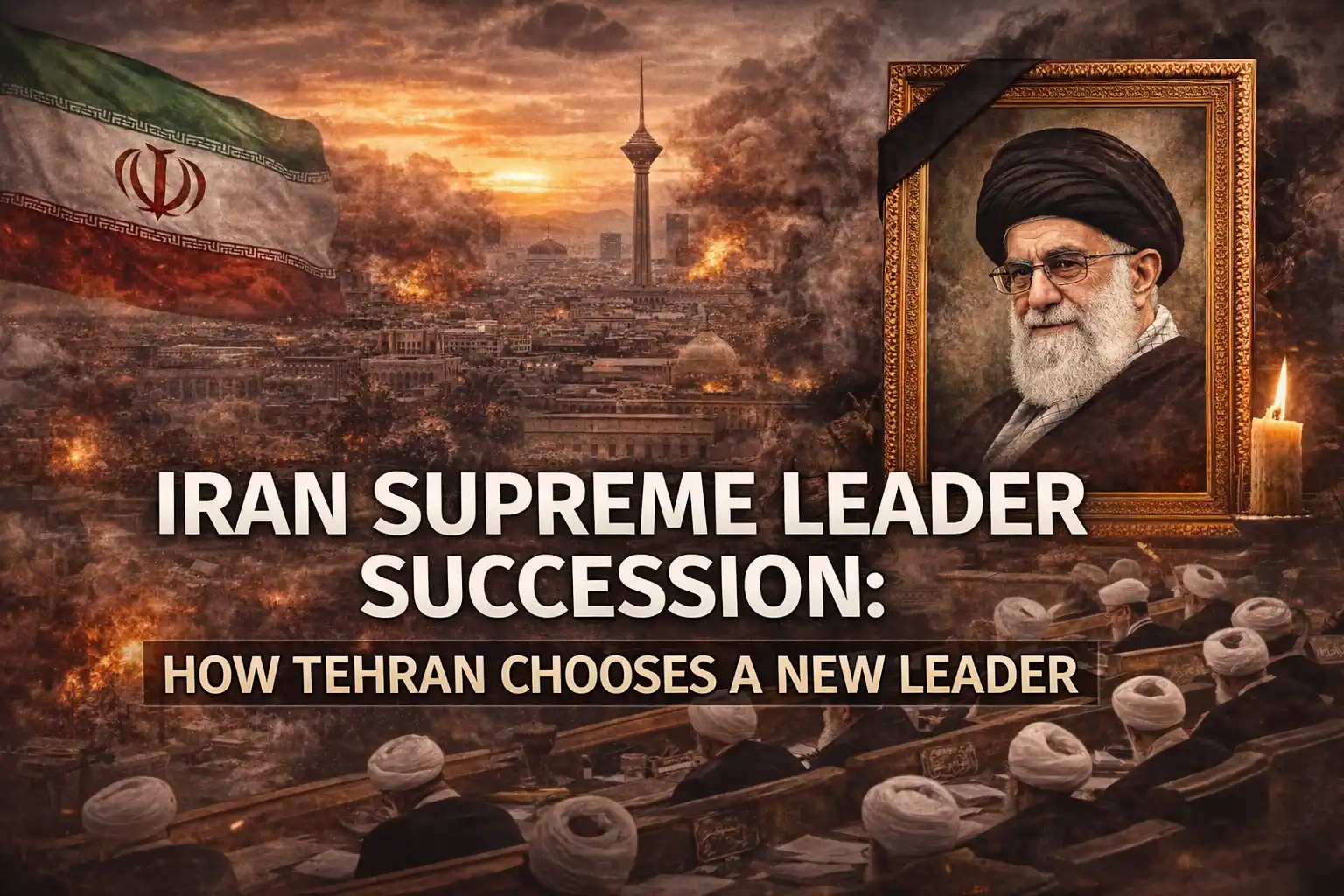
The Iran Supreme Leader succession process has entered its most critical moment following the reported assassination of Ali Khamenei. For decades, Khamenei served as the ultimate authority in the Islamic Republic. Now, his sudden death has left a power vacuum that threatens to destabilize the entire region. Consequently, the world is watching Tehran to see how it manages this unprecedented transfer of power.
One week has passed since the event, yet Iran has not officially announced a permanent successor. This delay has raised urgent questions about the country’s ability to maintain order during a national security crisis. Under the Iranian constitution, the Supreme Leader holds absolute authority over the military, the judiciary, and the political system. Therefore, the outcome of the Iran Supreme Leader succession will dictate the future of Middle East security.
Experts believe the Assembly of Experts has already reached a decision. However, they are likely keeping the identity of the new leader secret to prevent further targeted attacks. This transition is occurring while the US-Iran military conflict continues to escalate, making the timing particularly volatile for the clerical establishment.
The Iran Supreme Leader succession follows a rigid constitutional process designed to ensure clerical continuity. Unlike the presidency, the Supreme Leader is not chosen through a popular national vote. Instead, the 88-member Assembly of Experts holds the exclusive power to select and supervise the leader. These Islamic clerics are elected by the public every eight years after strict vetting by the Guardian Council.
Once a leader dies, the Assembly must convene immediately to deliberate behind closed doors. The process is entirely confidential to protect the integrity of the institution. Historically, the Assembly prioritizes candidates with strong religious credentials and political loyalty to the revolutionary ideals. Because of the current crisis, the clerics are under immense pressure to choose a figure who can command the respect of the military.
The constitution provides interim mechanisms to manage the state during these deliberations. A temporary council typically handles the leader’s duties until the Assembly reaches a consensus. Nevertheless, the prolonged silence from Tehran suggests that internal debates may be more complex than initially expected. This uncertainty adds a layer of risk to the ongoing US-Iran military conflict legal strategy being debated in Washington.
Some analysts suggest that the Iran Supreme Leader succession is being handled with extreme secrecy due to intelligence threats. Officials in Tehran are acutely aware that their high-ranking leaders are currently targets. The recent Israel Lebanon conflict has demonstrated the high efficiency of modern intelligence operations in the region.
Iranian academic Zor Kazni from the University of Tehran argues that protecting the successor is now a top priority. He believes that selecting a leader and announcing him are two distinct strategic steps. If the successor is revealed too early, he could face immediate assassination attempts from foreign adversaries. Therefore, the Islamic Revolutionary Guard Corps (IRGC) is likely overseeing the physical security of the transition.
The precedent set by the assassination of Hezbollah leader Hassan Nasrallah remains fresh in the minds of Iranian officials. They understand that a transition period is a moment of extreme vulnerability. Consequently, they may delay the public announcement until the new leader is safely ensconced within a secure facility. This strategy of “strategic silence” is a hallmark of Iranian crisis management.
The Iran Supreme Leader succession is also unfolding against a backdrop of domestic unrest. Iran is a multi-ethnic nation, and internal divisions often resurface during times of political instability. Recently, the IRGC has increased security operations near the borders to prevent militant infiltrations. These operations are particularly focused on areas where Kurdish militias have historically sought greater autonomy.
Tehran maintains that all ethnic groups are integrated into the national political structure. Kurdish and Azeri citizens participate in the elections for the Assembly of Experts. However, critics argue that economic sanctions and political grievances have fueled deep dissatisfaction among minorities. If the Iran Supreme Leader succession appears weak or disorganized, it could embolden anti-government factions.
Despite these internal pressures, external threats often act as a unifying force for the Iranian public. When the nation feels under siege from foreign powers, domestic disputes are frequently set aside in favor of national survival. The leadership transition will test whether this unity can hold under the weight of an unprecedented leadership change.
The identity of the next leader will significantly impact the Trump Iran leadership transition strategy. Washington has indicated that it will maintain “maximum pressure” on Tehran regardless of who is in charge. However, a more pragmatic Supreme Leader might seek a path toward de-escalation to save the Iranian economy. Conversely, a hardline successor could double down on regional proxy wars.
Iranian officials frequently accuse Western intelligence agencies of backing separatist groups to destabilize the country. While Western governments deny these claims, the information war is intensifying. The Iran Supreme Leader succession is now a focal point for global intelligence services. Every move by the Assembly of Experts is being analyzed for clues about Iran’s future military posture.
Meanwhile, regional allies like Hezbollah are watching the situation with concern. The Hezbollah Israel conflict relies heavily on Iranian financial and military support. If the new Supreme Leader shifts focus inward to secure his domestic base, proxy groups may find themselves with less support. This could fundamentally alter the power dynamics of the Middle East.
Ultimately, the Iran Supreme Leader succession represents the most significant political shift in Tehran since 1989. The Supreme Leader functions as the ideological compass of the state. He is the commander-in-chief and the final arbiter of all major domestic and foreign policies. Therefore, the choice of the Assembly of Experts will resonate for decades.
Analysts expect a degree of continuity rather than a sudden transformation. The Iranian system is designed to prevent radical shifts by embedding the leader within a network of conservative institutions. However, the unique pressures of 2026 may force the new leader to adopt more flexible strategies. The world must wait for the formal announcement to understand the new direction of the Islamic Republic.
For now, the state continues to function through its interim councils. The coming weeks will determine whether the Iran Supreme Leader succession leads to a stable transition or a period of prolonged internal strife. As the geopolitical landscape shifts, narakanet.com will continue to provide in-depth analysis of Tehran’s next move.