Physical Address
304 North Cardinal St.
Dorchester Center, MA 02124
Physical Address
304 North Cardinal St.
Dorchester Center, MA 02124

war • strategy • geopolitics
war • strategy • geopolitics
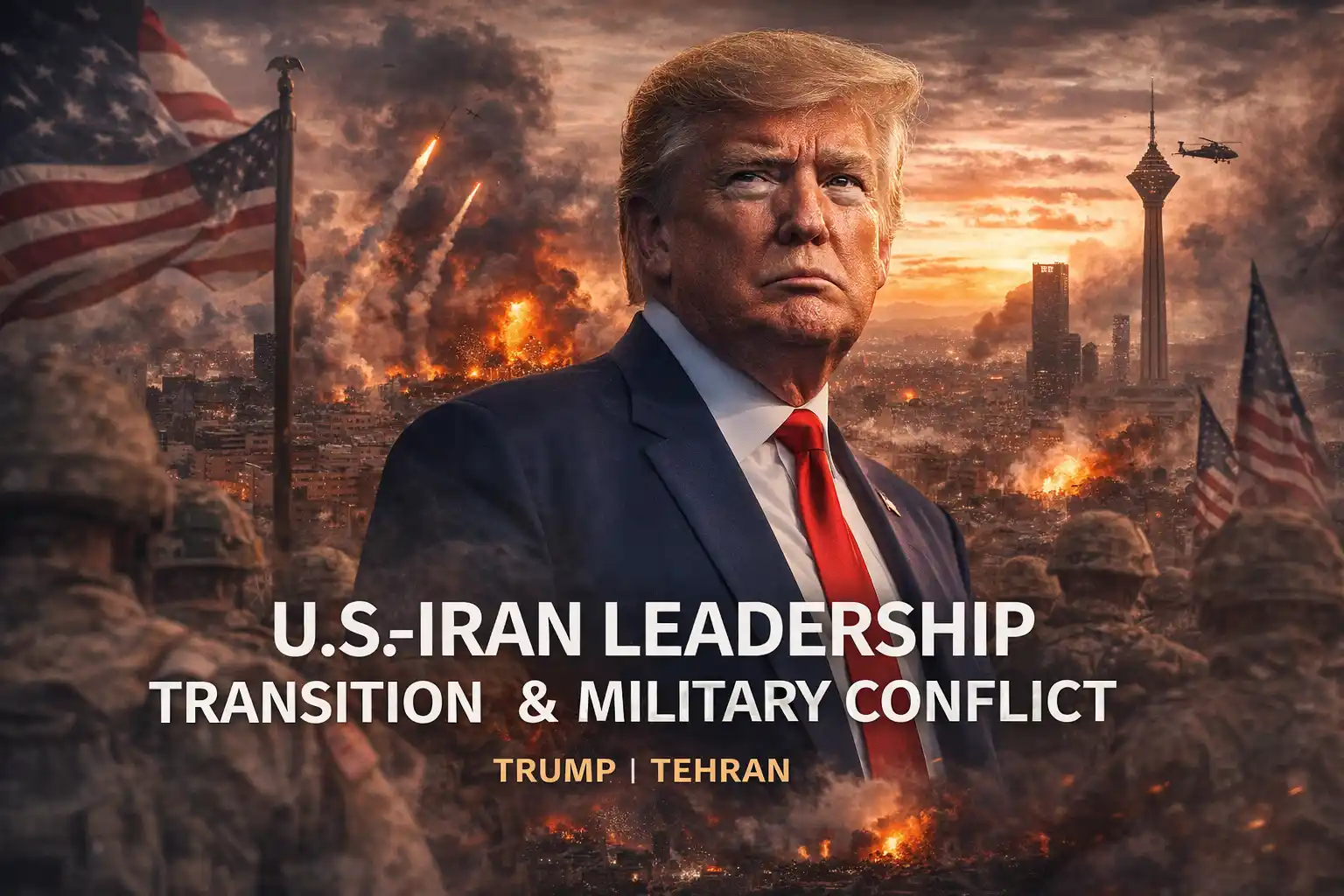
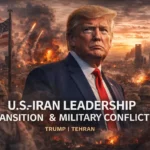
WASHINGTON D.C. — The geopolitical landscape of the Middle East has taken a defiant turn as President Donald Trump suggested that Washington must play a decisive role in the US Iran leadership transition. His remarks follow unconfirmed reports regarding the assassination of Iran’s Supreme Leader, Ali Khamenei, a development that has sent shockwaves through international diplomatic circles and ignited fresh military volatility.
In a recent interview with Politico, Trump asserted that the United States intends to shape the selection of Tehran’s next leader. He emphasized a vision for an Iran that prioritizes domestic rebuilding while permanently abandoning its nuclear aspirations.
“We’ll work with the people and the regime to make sure that somebody gets there that can build Iran properly—but without nuclear weapons,” Trump stated. These comments signal a return to an assertive “maximum pressure” doctrine, suggesting a proactive U.S. stance in determining the Islamic Republic’s political trajectory.
Officials in Tehran were quick to denounce Trump’s rhetoric, viewing it as a violation of national sovereignty. The Iranian government insists that the US Iran leadership transition is a domestic matter governed strictly by the nation’s constitutional framework, led by the Assembly of Experts.
Iranian representatives invoked the historical memory of the 1953 CIA-backed coup against Prime Minister Mohammad Mosaddegh, warning that modern Iran is far more resilient to foreign-led regime change. “The era of external powers choosing leaders for the Iranian people is over,” a spokesperson for the Ministry of Foreign Affairs noted, stressing that the clerical and political elite remain unified in the face of external threats.
While the political war of words intensifies, the military reality on the ground continues to deteriorate. Airstrikes targeting strategic military facilities around Tehran have become a nightly occurrence. Residents describe an atmosphere of persistent dread, with air raid sirens and explosions disrupting the capital’s daily life.
The Islamic Revolutionary Guard Corps (IRGC) has reportedly responded with retaliatory drone and missile strikes against U.S. and Israeli assets in the region. To demonstrate its remaining strength, Tehran recently showcased the Khorramshahr-4, a heavy missile system capable of striking long-range targets, signaling that its military backbone remains functional despite the bombardment.
Contrastingly, Trump has maintained that the joint U.S.-Israeli military campaign has effectively “decimated” Iran’s defense infrastructure. He claimed that the coalition has successfully neutralized significant portions of Iran’s radar networks and air defense systems.
“The military has been decimated,” Trump told reporters, dismissing concerns about potential ammunition shortages by asserting that the U.S. possesses “unlimited weapons” for continued operations. However, this stance has faced criticism at home, with some lawmakers arguing that the administration is bypassing Congressional authority to declare war, risking a prolonged and unauthorized regional conflict.
The potential for a power struggle within Iran’s political and security echelons remains high. While some Western observers hope for the emergence of a moderate leadership willing to engage in diplomacy, many analysts warn that external pressure often galvanizes hardline factions.
The question of who will ultimately fill the power vacuum in Tehran and whether they will choose confrontation or negotiation remains the most critical geopolitical challenge of 2026. For now, as the US Iran leadership transition looms, the region remains on the precipice of a much larger war.

[…] a result, the tension escalated into the current US-Iran military conflict. Zinke argues that the regional military balance has already shifted in favor of the US. He noted […]