Physical Address
304 North Cardinal St.
Dorchester Center, MA 02124
Physical Address
304 North Cardinal St.
Dorchester Center, MA 02124

war • strategy • geopolitics
war • strategy • geopolitics
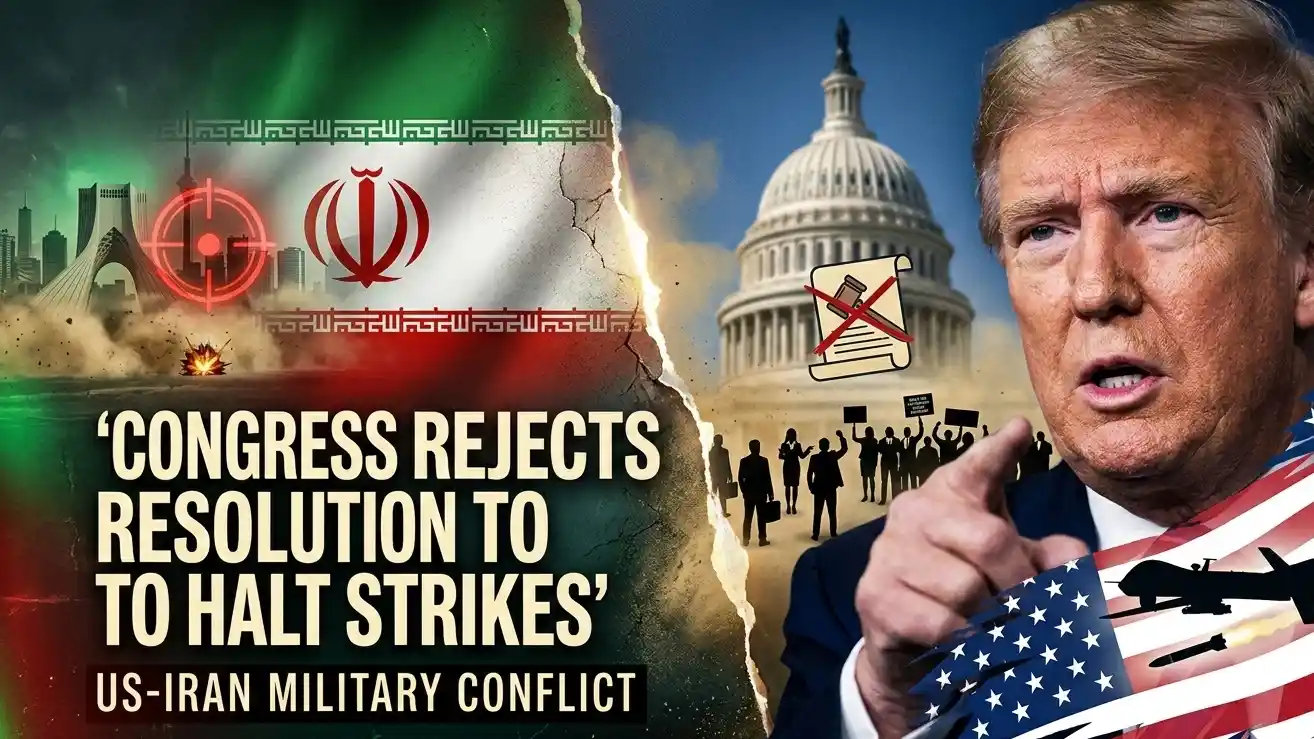
The US-Iran military conflict has reached a decisive turning point following a narrow vote in the House of Representatives. Lawmakers recently rejected a resolution aimed at halting President Trump’s ongoing military strikes against Iranian targets. This legislative outcome ensures that current operations will proceed despite growing concerns over regional stability.
The vote concluded with 219 representatives against the measure and 212 in favor. Consequently, the debate largely followed strict party lines. Most Republicans argued for presidential flexibility during a crisis. Meanwhile, Democrats contended that the strikes lacked proper legal authorization.
The recent vote highlighted a long-standing tension regarding presidential authority within the US-Iran military conflict. Under the U.S. Constitution, Congress holds the sole power to declare war. However, modern presidents frequently initiate limited military actions without formal congressional declarations.
Democratic lawmakers argue that the current escalation could lead to a large-scale war. Therefore, they demand a stronger role in shaping military policy. One representative warned about the immense human and economic costs of an unchecked confrontation. He urged his colleagues to uphold their constitutional responsibilities before authorizing further violence.
Nevertheless, Republican leaders dismissed these arguments as ill-timed. They believe the resolution would weaken the military’s position during a sensitive international crisis. Furthermore, they argued that Congress must present a united front to deter Iranian aggression effectively. This fundamental disagreement remains a core feature of the US-Iran military conflict.
Despite the failure of the resolution, legal frameworks may still constrain the US-Iran military conflict. The War Powers Act requires the president to seek congressional authorization if operations exceed a specific timeframe. Typically, this authorization must be obtained within 90 days of the initial engagement.
If Congress refuses to grant approval after this period, military operations must legally cease. Therefore, lawmakers are expected to revisit this issue in the coming months. Political pressure will likely increase as the conflict continues to develop. Some analysts believe Republicans may face tougher questions from voters if the war becomes prolonged.
Moreover, the legal framework ensures that the executive branch does not have unlimited power. Consequently, the administration must carefully manage its strategic objectives within these statutory limits. You can explore more about these complexities in our previous analysis of the US-Iran military conflict legal dilemmas.
While Congress debated the resolution, influential media voices raised questions about the motivations behind the strikes. Some commentators argue that the US-Iran military conflict does not directly serve U.S. national security. Instead, they suggest the campaign primarily reflects regional politics in the Middle East.
Critics claim the military actions may benefit regional allies like Israel more than the United States. Furthermore, they argue that the administration has failed to provide clear evidence of “imminent” Iranian attacks. These skeptics believe that Iran is unlikely to seek a direct confrontation with American forces.
The United States has already deployed significant assets, including aircraft carriers and advanced missile systems. Because of this military imbalance, Iran may focus on asymmetrical responses rather than conventional warfare. This strategic reality adds another layer of uncertainty to the US-Iran military conflict.
Experts agree that the US-Iran military conflict carries significant risks for the global economy. Energy markets are particularly sensitive to instability in the Middle East. If tensions threaten shipping routes or oil production, energy prices could spike globally. Therefore, the conflict has direct implications for domestic inflation and consumer costs.
Additionally, the United States faces growing military commitments on multiple fronts. Some analysts worry that a prolonged conflict with Iran could strain available resources. This concern is especially relevant as Washington continues to support operations in other regions. Supporters, however, believe that decisive military pressure will deter larger future threats.
The current strategy relies heavily on naval and air capabilities. By maintaining this pressure, the administration aims to force Tehran into a defensive posture. However, the risk of a wider regional war involving groups like Hezbollah remains a constant concern for military planners.
For now, the US-Iran military conflict shows no signs of slowing down. The House vote ensures that President Trump retains the authority to conduct strikes in the near term. However, the political environment in Washington remains highly polarized.
International observers are closely watching for signs of diplomatic de-escalation. Yet, if neither side is willing to step back, the crisis could reshape Middle East security for years. The coming weeks will determine whether the path leads toward a negotiated settlement or a deeper military confrontation.
For further context on how leadership changes affect this situation, see our report on the Trump Iran leadership transition.

[…] Moreover, defense analysts note that the frequency of these attacks has increased. This trend indicates a coordinated effort to test the limits of Israel’s defense systems. The strategic depth of the Iran missile attack on Israel continues to challenge regional stability. For more on how lawmakers are reacting to these escalations, see our report on Congress rejecting the resolution to halt strikes. […]