Physical Address
304 North Cardinal St.
Dorchester Center, MA 02124
Physical Address
304 North Cardinal St.
Dorchester Center, MA 02124

war • strategy • geopolitics
war • strategy • geopolitics
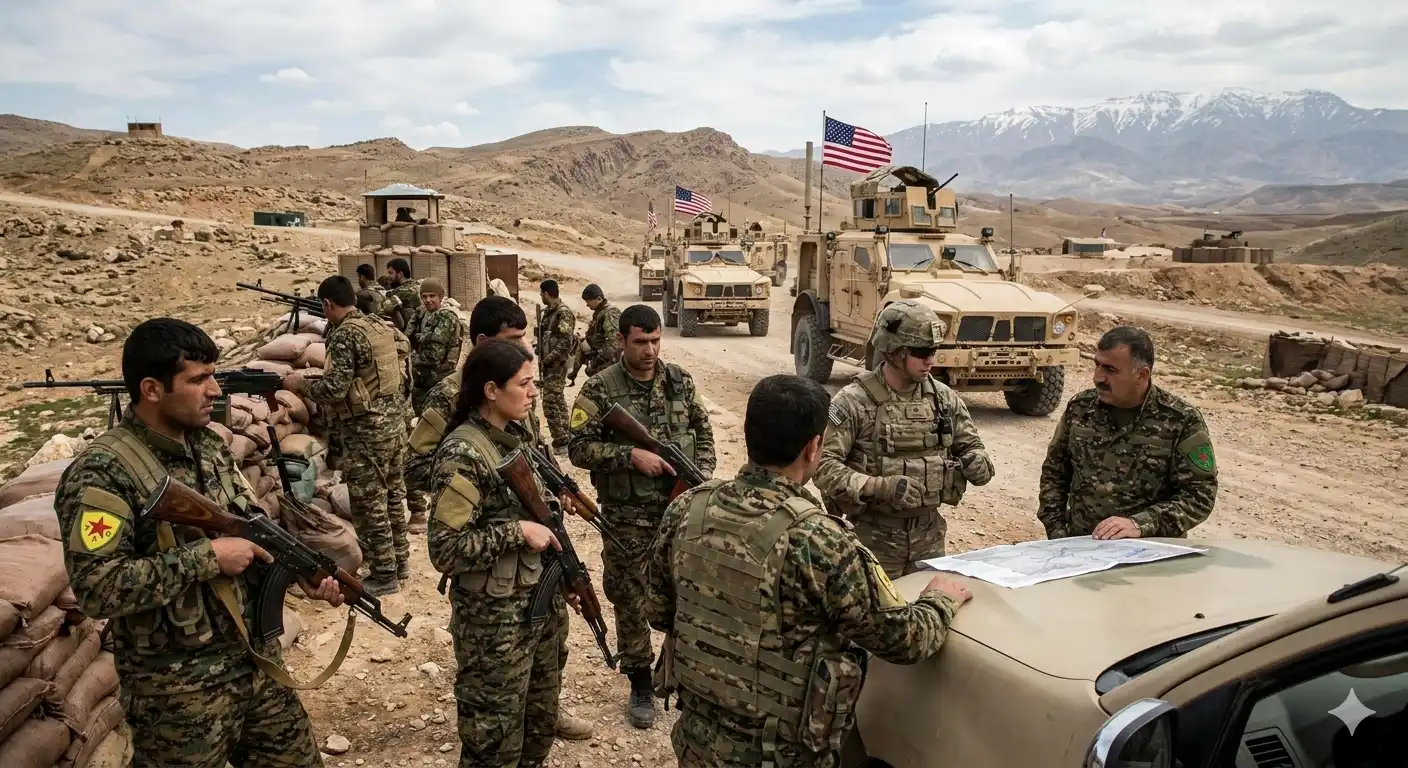
The US-Iran military conflict is currently raising profound strategic questions in Washington and across the Middle East. One central issue dominates the geopolitical debate: can the administration achieve its objectives without deploying American boots on the ground? As the air campaign intensifies, policymakers are searching for viable local partners to sustain pressure on Tehran.
Military analysts argue that modern air campaigns rarely achieve decisive political results alone. Consequently, speculation is growing that Kurdish militias near the Iran-Iraq border could play a pivotal role in a potential ground operation. However, Kurdish leaders have publicly rejected any plan that could escalate the US-Iran military conflict into a regional catastrophe.
The ongoing US-Iran military conflict has already affected territories far beyond Iran’s sovereign borders. Recently, Iranian drones and missiles struck several sensitive locations in northern Iraq, specifically targeting the autonomous Kurdistan region. One of these attacks hit near Erbil, where local residents captured dramatic footage of drones exploding in residential areas.
Witnesses described a scene of sudden devastation followed by widespread chaos. One injured civilian reported seeing the drone approaching shortly before it detonated nearby. Tehran claimed these strikes specifically targeted anti-Iranian separatist groups operating near the border. Furthermore, Iran has repeatedly warned that it will not tolerate militant organizations using Iraqi territory as a launchpad for attacks.
These violent incidents highlight how quickly the US-Iran military conflict could destabilize neighboring sovereign nations. As a result, regional security has become a top priority for international observers. You can read more about the legislative response to these strikes in our report on how Congress rejected the resolution to halt strikes.
The Kurdish population spans several nations, including Iraq, Iran, Turkey, and Syria. Despite their significant numbers, the Kurds do not possess an independent state. Nevertheless, various Kurdish armed groups operate effectively along the rugged Iran-Iraq border. These forces possess thousands of seasoned fighters with extensive regional combat experience.
Official leaders in Iraqi Kurdistan insist they do not wish to participate in a wider regional war. They emphasize that their primary objective remains maintaining local stability. However, some Kurdish political figures have hinted at a different strategic possibility. One regional leader stated that Kurdish forces are prepared for various military scenarios if regional conditions shift.
Such statements have fueled intense speculation that Kurdish militias could influence the future trajectory of the US-Iran military conflict. If Washington decides to leverage these forces, the nature of the confrontation would change significantly. This potential partnership represents a major pillar of the Washington strategy updates regarding Middle East security.
Some media reports claim that Western intelligence agencies are already exploring cooperation with Kurdish opposition groups. According to these unconfirmed reports, both American and Israeli services could provide tactical support to Kurdish militants. However, the White House has strongly denied these claims, asserting that no such plan exists for a Kurdish-led ground offensive.
Government representatives describe these reports as mere speculation rather than a confirmed military strategy. Still, analysts note that modern conflicts often prioritize local partners over large-scale foreign troop deployments. Because of this prevailing trend, Kurdish forces remain a central part of the strategic discussion surrounding the US-Iran military conflict.
Military experts remain divided regarding the actual capabilities of Kurdish forces inside Iran. Some analysts believe these militias could create localized pressure on Iranian security infrastructure. Their intimate knowledge of the mountainous border terrain provides a distinct tactical advantage over conventional forces.
However, many researchers argue that Kurdish groups lack the necessary resources for a full-scale offensive against the Iranian state. A researcher specializing in Kurdish politics explained that these groups focus mainly on self-defense and political autonomy. Therefore, leading a major war against Iran may not align with their long-term strategic priorities.
Additionally, Kurdish leaders understand the heavy consequences of becoming the primary ground force in a large-scale regional conflict. Because of these inherent risks, Kurdish factions remain extremely cautious about their involvement in the US-Iran military conflict. They require significant guarantees before committing their fighters to such a dangerous campaign.
The Kurdish issue carries significant geopolitical implications for the entire Middle East. Any large-scale Kurdish military action would affect Turkey, Syria, and Iraq simultaneously. For example, Turkey strongly opposes the creation of any new Kurdish autonomous regions near its borders. Ankara fears such developments could embolden separatist movements within its own territory.
Meanwhile, Iran views these militant groups as a direct threat to its national security. If Kurdish forces became officially involved in the US-Iran military conflict, regional tensions would likely intensify dramatically. Some analysts warn that the war might expand beyond Iran’s borders, triggering a domino effect of instability.
Kurdish leaders also face a historical challenge regarding international trust. In the past, Kurdish groups have cooperated with global powers, only to be abandoned when geopolitical priorities shifted. For instance, while Kurdish fighters were crucial in defeating ISIS, many felt betrayed when international support was later withdrawn.
Because of this history, Kurdish parties approach any new alliance with extreme skepticism. Experts say the leadership now evaluates every strategic partnership through the lens of long-term security. Consequently, they are unlikely to join the US-Iran military conflict without ironclad guarantees for their future political rights.
For now, the idea of a Kurdish-led ground campaign against Iran remains speculative. The White House continues to deny any such plan, and Kurdish leaders have not issued a formal approval for involvement. Nevertheless, the US-Iran military conflict is evolving at a rapid pace.
If diplomatic efforts fail, pressure may grow for a new strategy to replace the current air-only approach. In that scenario, Kurdish militias will likely reappear in strategic discussions among military planners. The next phase of the US-Iran military conflict will depend on delicate regional alliances and long-term geopolitical calculations.

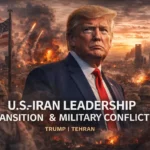
[…] Former US officials have suggested that Kurdish fighters could become a viable ground force. This prospect adds a layer of military urgency to the transition in Tehran. We detailed this possibility in our exclusive report on Kurdish militias as a key ground force. […]
[…] mirror the strategy of using proxy forces. This is similar to the tactical discussions regarding US-Iran military conflict and Kurdish militias. These overlapping strategies suggest a more militarized approach to border […]