Physical Address
304 North Cardinal St.
Dorchester Center, MA 02124
Physical Address
304 North Cardinal St.
Dorchester Center, MA 02124

war • strategy • geopolitics
war • strategy • geopolitics
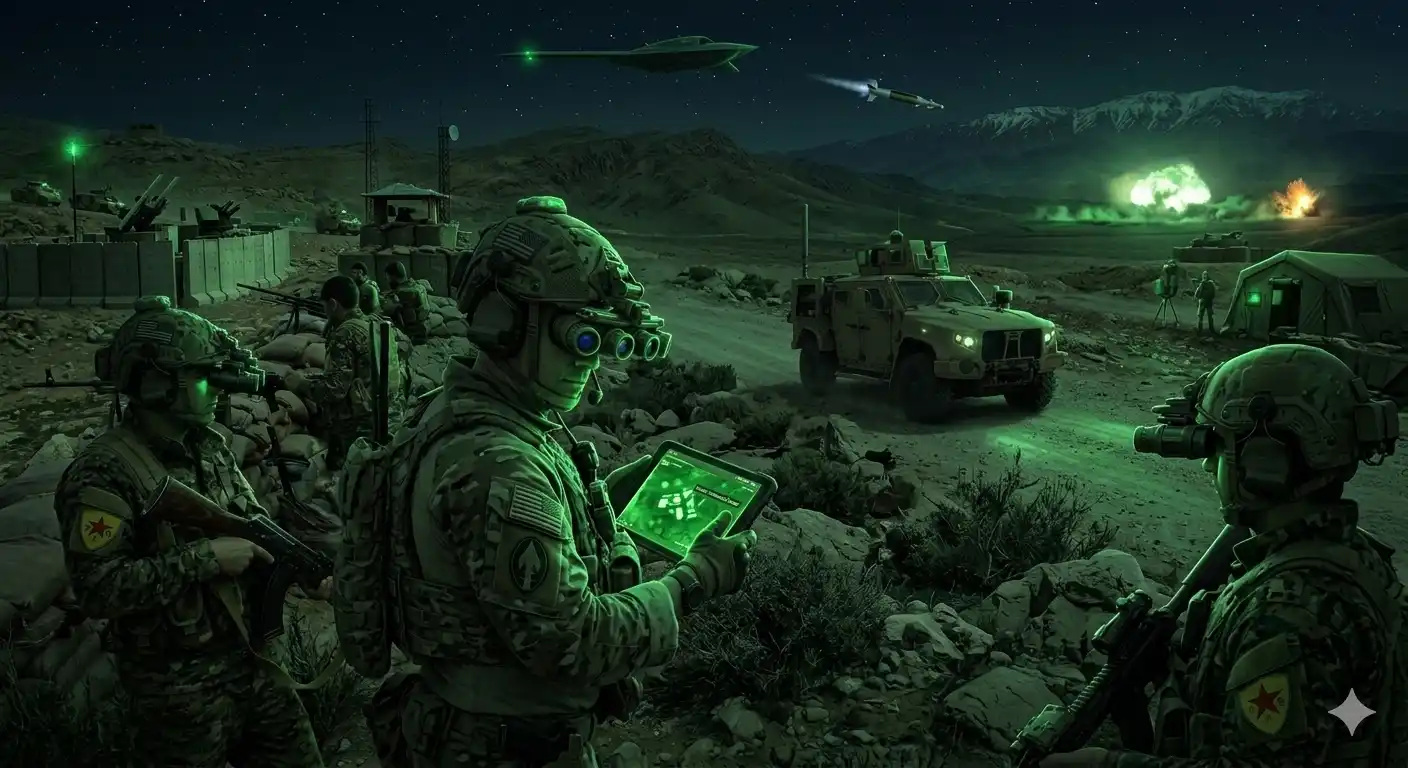
The US-Iran military conflict has entered a volatile and uncertain phase. Washington is currently increasing strategic pressure on Tehran while defending its broader military objectives. Government officials argue that the United States acted solely to prevent an imminent security threat. However, many global critics now question the long-term consequences of this direct confrontation.
The debate intensified following recent comments from Republican Congressman Ryan Zinke. During an interview in Washington, DC, Zinke defended the administration’s current trajectory. As a member of the House Foreign Affairs Committee, he maintains that the campaign is necessary. Specifically, he believes it will eliminate nuclear ambitions and restore Middle East stability. Consequently, the world is watching closely as the US-Iran military conflict reshapes global geopolitics.
Supporters of the administration claim the operation prevents nuclear proliferation. According to Zinke, Iran received several diplomatic offers before the situation worsened. The United States explicitly demanded that Tehran abandon its pursuit of nuclear weapons. Nevertheless, Washington claims that the Iranian leadership rejected every reasonable proposal.
As a result, the tension escalated into the current US-Iran military conflict. Zinke argues that the regional military balance has already shifted in favor of the US. He noted that Iranian forces have effectively lost control of their own airspace. Furthermore, the country’s naval capabilities have sustained significant, perhaps irreparable, damage. These tactical losses severely limit Tehran’s ability to coordinate a large-scale military response.
Currently, US forces maintain a decisive level of air superiority. Military analysts suggest this advantage allows for targeted strikes with minimal risk. Zinke highlighted that the US utilized offshore firepower, including B-52 and B1 bombers. This overwhelming force has neutralized the Iranian navy’s ability to operate. Therefore, Washington can now provide complete air cover for any necessary follow-up operations.
However, a new challenge has emerged within the US-Iran military conflict. The Iranian military has moved from a centralized to a decentralized command structure. While this makes individual units harder to target, it also creates unpredictability. Individual commanders may now act without direct orders from a central government. This shift complicates the “chess match” that Washington is currently playing in the region.
The broader US-Iran military conflict reflects decades of deep-seated tension. Washington frequently accuses Tehran of destabilizing the region through various militant proxies. Specifically, officials point to groups like Hezbollah and Hamas as primary examples. These alliances create constant friction and threaten neighboring countries and vital infrastructure.
Notably, Zinke mentioned that Iran has previously targeted regional energy facilities. These missile strikes placed immense pressure on the US to respond. Furthermore, Iranian drone programs now threaten multiple sovereign nations, including Israel. Because of these actions, Washington views the current escalation as a strategic necessity. Conversely, critics still fear that these actions could trigger a much wider regional war.
While the US-Iran military conflict dominates the news, domestic issues remain vital. Members of Congress are currently advancing a significant housing affordability bill. Rising costs for homes and rentals remain a primary concern for American families. Zinke admitted that policymakers must strike a balance between global security and domestic health.
“You cannot forget the home team,” Zinke stated during his discussion. He believes the American dream depends on economic stability and safe home ownership. Although some economic indicators are positive, many citizens still feel the pinch. For example, US inflation has recently dipped to 2.1%. However, the high cost of housing prevents many families from feeling the benefits of these numbers.
The US-Iran military conflict has sparked intense political divisions within Washington. Some analysts argue that military action could spike global energy prices. Indeed, recent fluctuations in oil and gas prices have already alarmed many voters. These economic ripples come at a time when public support for foreign wars is receding.
Despite these fears, Zinke remains optimistic about the timeline. He does not believe the conflict will become a “forever war” for the United States. Instead, he argues that the campaign will remain focused and relatively short. The administration hopes that military pressure will eventually lead to internal reform. If the Iranian people choose a different path, the entire region could see a new era.
Zinke envisions a potential “Golden Era” for the region following the US-Iran military conflict. He believes the Middle East is full of intelligent, capable people. If the threat of regional aggression is removed, economic prosperity could follow. This vision depends on a transition away from a regime that launches missiles at its neighbors.
“Imagine what the Middle East could do economically,” Zinke suggested. He believes the fundamentals for prosperity are already in place. However, this future requires a neighbor that does not inflict pain through proxy groups. Therefore, the current military strategy aims to clear the path for long-term growth. Many Americans remain skeptical, but the administration sees this as a path to lasting peace.
A major point of concern remains the potential use of ground troops. As a former Navy SEAL, Zinke has a unique perspective on this risk. He stated that the President has no desire to put “boots on the ground” in Iran. Such a deployment would represent a massive escalation of the US-Iran military conflict.
Furthermore, any large-scale ground invasion would likely require formal congressional approval. Historically, these operations involve months of visible military buildup. We saw this clearly during the previous conflicts in Iraq and Afghanistan. For now, the US strategy relies almost entirely on air and naval assets. This approach aims to contain the threat without committing thousands of American soldiers to the field.
The future of the US-Iran military conflict is tied to other global events. The ongoing Russian invasion of Ukraine continues to drain US military resources. Additionally, tensions in the Pacific require a constant and vigilant presence. Because resources are not infinite, Washington must move assets carefully between these high-stress zones.
Military leaders often refer to the US as the “Arsenal of Freedom.” However, maintaining this title requires immense financial and physical investment. Missiles used in the Middle East are expensive and take time to replace. Therefore, the administration must ensure that the job in Iran is finished efficiently. Failing to do so could leave the US strained in other critical parts of the world.
The ultimate outcome of the US-Iran military conflict remains to be seen. Supporters believe that firm pressure will eventually break the cycle of regional violence. They hope it will lead to a more stable and prosperous Middle East for everyone. Meanwhile, critics remain wary of the potential for unintended consequences and regional chaos.
For now, Washington’s objective is clear: prevent nuclear development and protect interests. Whether this leads to a peaceful de-escalation or a deeper crisis is the question of the year. The decisions made today will undoubtedly shape the geopolitics of the 2020s for decades to come.

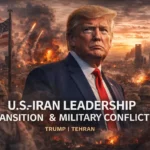
[…] strategic balance across the Middle East. These developments are unfolding alongside the broader US-Iran military conflict, creating a complex web of security challenges for global […]
[…] the new leader secret to prevent further targeted attacks. This transition is occurring while the US-Iran military conflict continues to escalate, making the timing particularly volatile for the clerical […]
[…] As geopolitical pressure mounts, the Iran Supreme Leader succession intersects with various regional crises. Washington’s current stance plays a major role in these internal dynamics. You can explore the broader context of these tensions in our analysis of the US-Iran military conflict and Washington’s strategy. […]
[…] Furthermore, the Sri Lanka protests Iran strikes highlight how distant geopolitical developments influence public opinion worldwide. Similar reactions have appeared in several other nations as regional tensions reach a breaking point. These protests are inherently linked to the broader US-Iran military conflict and Washington’s 2026 strategy. […]
[…] with broader administrative adjustments. For instance, the administration is currently refining its US-Iran military conflict Washington strategy 2026 to address global […]